
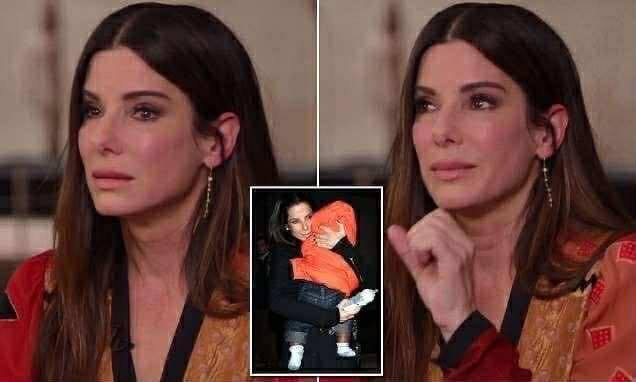
After nearly two years away from the spotlight, Sandra Bullock is quietly but deliberately stepping back into public life. Her return is not being driven by spectacle or publicity campaigns, but by readiness—emotional, personal, and professional. For Bullock, the past few years have been marked by loss, reflection, and a necessary pause from a career that once moved at a relentless pace.
In August 2023, Bullock lost her longtime partner, Bryan Randall, after a private battle with ALS. His death reshaped her world. Those close to her described the period that followed as deeply painful and intensely private. Bullock withdrew almost entirely from public appearances, focusing her energy on her family and on healing. For an actress who spent decades under constant public scrutiny, the silence was intentional.
That silence is now easing.
According to people familiar with her thinking, Bullock has reached a point where looking forward no longer feels disloyal to the past. She is not rushing, but she is no longer hiding either. A source close to her described her as “excited about the future” and emotionally ready to reengage with the work she loves. The phrasing matters. This is not about reclaiming fame. It is about reclaiming joy.
Bullock was last seen publicly in July in Beverly Hills, where she appeared relaxed and smiling as photographers captured candid shots. The images quickly circulated, not because she looked dramatically different, but because she looked present. At the end of that month, she turned 60—an age that often invites retrospectives, but in her case seems to mark a new phase rather than a closing chapter.
Her decision to step away from acting in the first place was deliberate. In March 2022, Bullock announced she would be taking a break, explaining that she wanted time away from the constant cycle of production, promotion, and performance. At the time, she had already built one of the most durable careers in modern Hollywood, with more than 50 films across comedy, drama, action, and romance.
Her filmography includes cultural staples like Miss Congeniality and The Blind Side, projects that showcased her range and helped cement her status as both a box-office draw and a reliable dramatic presence. She won an Academy Award, carried franchises, and repeatedly proved she could anchor a film without leaning on spectacle. Few actors of her generation achieved that balance.
Yet Bullock has never been sentimental about her career. She has spoken openly about burnout, about the pressure to constantly be “on,” and about the toll that takes over time. Her break was not a retreat—it was a reset.
Now, that reset is leading to a carefully chosen return. Bullock is set to star alongside Nicole Kidman in Practical Magic 2, the long-awaited follow-up to the 1998 cult classic Practical Magic. The original film, which paired Bullock and Kidman as sisters bound by love and mysticism, gained a devoted fan base over the years despite mixed reviews at release. Its blend of intimacy, fantasy, and emotional grounding aged well, becoming a reference point for audiences who grew up with it.
Those close to Bullock say the sequel was not an automatic yes. She considered it carefully, weighing not just the script but the timing. Ultimately, the project appealed to her because it felt familiar without being repetitive. Reuniting with Kidman, a longtime friend and collaborator, added a layer of comfort and trust that mattered. According to one insider, Bullock is “genuinely excited” to work with Kidman again and looks forward to the experience as much as the result.
This return does not signal a full-scale comeback tour or a packed slate of future projects. Bullock is being selective. She is prioritizing roles that feel meaningful, environments that feel supportive, and schedules that allow her to remain present for her children. Motherhood has always been central to her life, and that has not changed.
On a personal level, Bullock is also navigating what comes after profound loss. Those around her say she is open to the possibility of dating again someday, but there is no urgency. Her focus remains on her family, her emotional health, and the slow process of rebuilding a sense of normalcy. Grief does not disappear because time passes; it reshapes itself. Bullock appears to understand that deeply.
What stands out about this moment is its lack of drama. There are no grand statements, no forced narratives about reinvention or triumph. Instead, there is steadiness. Bullock is returning to her career the same way she has lived much of her life: privately, intentionally, and on her own terms.
In an industry obsessed with momentum and visibility, her approach feels almost radical. She stepped away when she needed to. She stayed away as long as it took. And now she is coming back because she wants to, not because she feels obligated.
For audiences, her return will likely feel familiar in the best way. Bullock has always brought a grounded quality to her roles, a sense of emotional accessibility that made her characters feel lived-in rather than performed. That quality does not fade with time; if anything, it deepens.
Sandra Bullock is not reclaiming a spotlight she lost. She never lost it. She simply chose to step out of it for a while. Now, with intention and clarity, she is stepping back in—changed by life, shaped by loss, and ready to work again, not as she was, but as she is.